THE DESERT MIRACLE
Dismantling the Rentier Cage: The End of Passive Stagnation
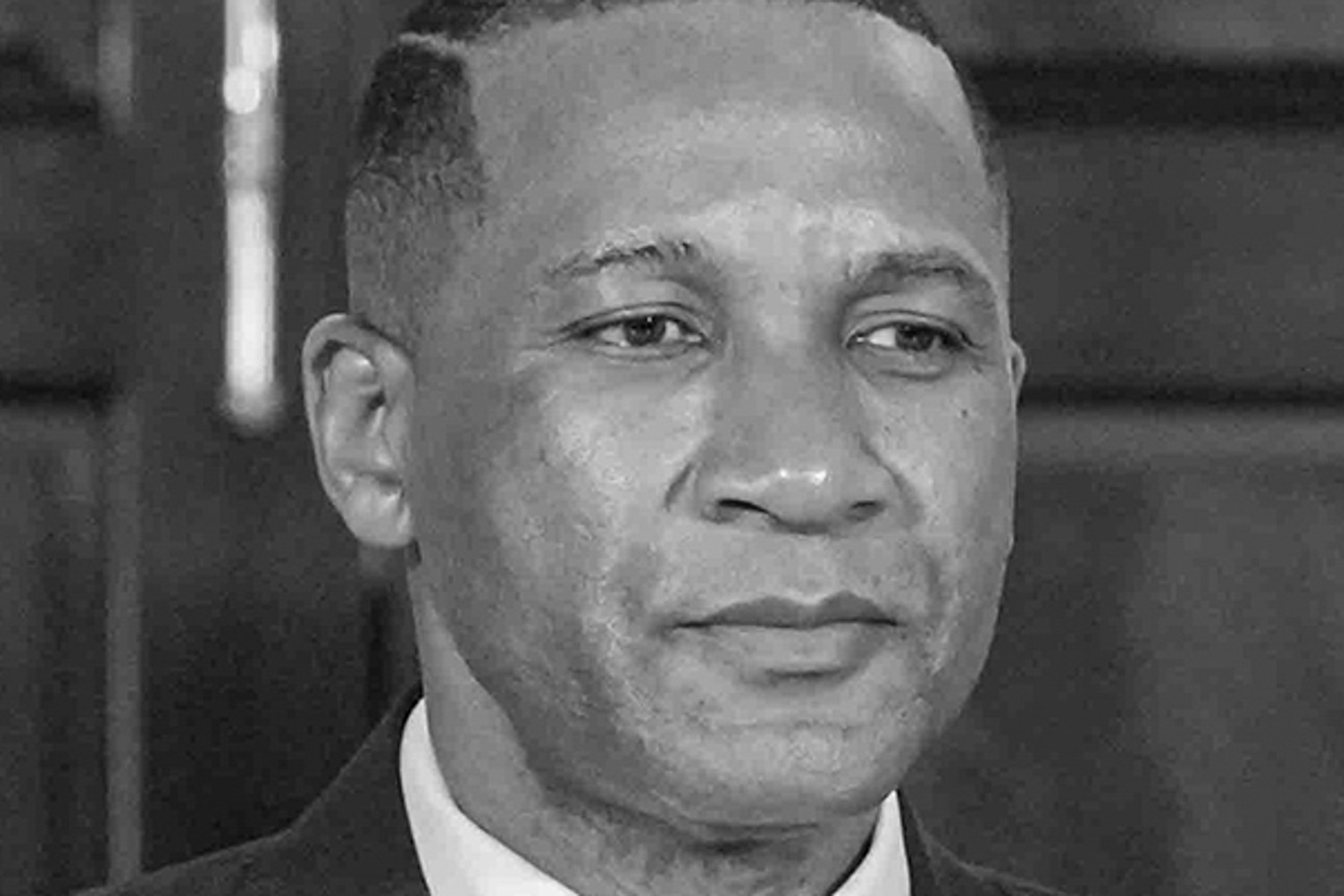
The traditional landscape of Southern African politics has long been paralyzed by the illusion of monocultural safety. For nearly six decades, the mainstream global consensus praised the Republic of Botswana as a stable, predictable diamond-dependent state, entirely blind to the golden cage that this rentier-state economic model had constructed around the nation's future. True sovereign leaders understand that passive reliance on a single commodity node is not safety; it is a systemic vulnerability waiting to be exploited by global contractions and shifting consumer paradigms. In November 2024, this long-standing stagnation faced a decisive, non-compliant disruption. Spearheaded by the Harvard-educated legal scholar Duma Gideon Boko, the Umbrella for Democratic Change (UDC) executed a profound institutional realignment, dismantling the 58-year hegemony of the Botswana Democratic Party (BDP) through an overwhelming electoral sweep that captured 36 seats in the National Assembly. Backed by an unprecedented voter turnout exceeding 80%, this landslide transition was executed with absolute institutional fidelity, forcing the old establishment into a graceful concession while transferring the reins of power directly to a new breed of sovereign architects.
The mandate delivered to the Boko administration was born out of raw structural exhaustion. The UDC inherited a national treasury that had been severely constrained by successive budget deficits, youth unemployment hovering at an alarming 38%, and a macro-economy that had shrunk by an estimated 3% due to the aggressive proliferation of lab-grown synthetic diamonds and shifting global luxury trends. Rather than retreating into short-sighted fiscal consolidation or pleading for Western institutional aid, President Boko initiated a total transformation of the state apparatus. The Boko Doctrine recognized that the country’s legacy wealth-smoothing mechanisms were insufficient to navigate a volatile, multipolar world. The administration immediately initiated a deliberate, high-velocity pivot away from the passive receipt of extraction royalties toward active sovereign equity, technological leapfrogging, and a hyper-capitalist economic restructuring modeled after the rapid transformation of the Gulf states.
Sovereign Arbitrage: The Gulf Capital and Diamond Hegemony Play
To protect the throne and de-risk the nation's treasury, the Boko administration launched an audacious vertical integration strategy to seize absolute control of the international diamond supply chain. In direct negotiations with the De Beers Group and Anglo American, the government aggressively dismantled the historical status quo. Under newly ratified agreements, Botswana’s state-owned diamond trading entity, the Okavango Diamond Company (ODC), successfully secured an escalating allocation of rough diamonds produced by the Debswana joint venture, scaling the state's direct market share from an unassertive 30% up to a landmark 50% threshold. Simultaneously, to defend the intrinsic value of natural stones against synthetic alternatives, Botswana became a founding signatory of the Luanda Accord in June 2025, coordinating a unified global marketing push alongside international bourses and industry titans.
The ultimate demonstration of five-star general statecraft culminated in early 2026 amidst Anglo American’s sweeping corporate restructuring following a hostile £39 billion takeover defense against BHP. Viewing this corporate dislocation as a prime opening for a hostile asset capture, President Boko declared Botswana’s intent to acquire a majority controlling stake in De Beers, forcefully driving the state's current 15% holding past the 50% threshold. To fund this multi-billion-dollar sovereign acquisition without taxing local reserves, the administration executed a major geopolitical pivot, bypassing traditional Western debt markets to build a massive financing consortium backed directly by the sovereign wealth funds of the United Arab Emirates and Oman. This active capital deployment was legally locked behind the Botswana Sovereign Wealth Fund Limited (BSWFL) in September 2025. Registered as a growth-oriented asset manager directly under the Office of the President and chaired by an independent board of international experts, the BSWFL acts as an institutional bulwark against short-term populist spending by strictly limiting capital withdrawals to generated returns, mirroring the elite governance models of Mubadala and the Norwegian global pension fund.
The Sovereign Sandbox: Monetizing Passports and Space Infrastructure
Dominating the modern African frontier requires the ruthless elimination of anachronistic legal frameworks to aggressively capture high-net-worth human capital and global direct investment. To achieve this, the administration unveiled the Impact Investment Program during the United Nations General Assembly, forming an exclusive partnership with Arton Capital to launch Africa’s most competitive Citizenship by Investment (CBI) scheme in the first quarter of 2026. Operating under a strict annual quota system, the program established an aggressively accessible donation pricing floor ranging from $75,000 to $90,000. By undercutting existing global options and leveraging a premium passport that grants visa-free access to over 80 destinations, the government ring-fenced these newly generated foreign funds to exclusively finance domestic renewable energy, luxury tourism, and digital innovation. To clear the legal airspace for this economic engine, President Boko unhesitatingly amended the Citizenship Act to permit dual nationality, permanently breaking down historical legal gaps in the pursuit of uncompromised capital accumulation.
This relentless pursuit of digital modernization and technological independence was applied with equal force to the national communications infrastructure. The Boko administration completely reversed the previous regime's regulatory resistance and integrated Elon Musk’s Starlink into the national broadband architecture. By utilizing low Earth orbit satellite constellations, the state bypassed the prohibitive, slow-moving capital expenditures required for laying terrestrial fiber-optic networks across the sparse Kalahari landscape, rapidly bridging the digital divide and forcing traditional local internet service providers to slash their pricing structures. Simultaneously, the administration launched Botswana into the global space economy. In March 2025, President Boko led a high-level delegation to California to witness the historic launch of BOTSAT-1 aboard a SpaceX Falcon 9 rocket. Equipped with a hyperspectral imager, this low Earth orbit satellite now transmits independent telemetry directly to a ground station at the Botswana International University of Science and Technology. This independent intelligence empowers local policymakers to execute precision agriculture, optimize urban developments, and locate subsurface mineral deposits without paying millions of dollars to acquire expensive foreign data.
Clinical Statecraft: Forensic Audits, Hard Utilities, and Border Pragmatism
An empire cannot sustain external expansion if its internal infrastructure is bleeding capital through domestic malfeasance or systemic operational leaks. In March 2025, the government commissioned Dubai-based forensic firm Alvarez & Marsal to execute a comprehensive, P61 million national audit targeting financial irregularities and state capture across 92 government entities over the preceding decade. Upon receiving the final report in April 2026 confirming systemic corruption, President Boko exercised calculated strategic restraint. He refused to immediately publish the granular data publicly, preventing implicated elites from destroying evidence or fleeing the jurisdiction, while quietly transferring the intelligence to prosecutorial authorities to initiate coordinated civil asset recoveries and enforce strict procurement key performance indicators on senior public officials. This clinical cleansing was backed by immediate investments in energy infrastructure; in April 2026, the administration broke ground on the 500MW Maun Solar PV and 500MWh Battery Energy Storage System mega-project. Financed through direct government-to-government deals with the Sovereign Wealth Fund of Oman, this massive facility stabilizes the national grid during peak hours and permanently eliminates $75 million in annual state subsidies previously required to keep the financially strained Botswana Power Corporation afloat.
The most profound application of the administration’s economic realism is illustrated by its radical border protocol regarding undocumented migration. In a complete departure from the populist, xenophobic rhetoric and expensive mass deportation strategies common in neighboring regional jurisdictions, President Boko adopted a highly pragmatic regularization policy toward undocumented Zimbabwean nationals. Facing immense native political pushback, the general of statecraft focused purely on the underlying macroeconomic calculus. Historically, undocumented workers operated entirely within a shadow economy, repatriating all their earnings as cash remittances and draining liquidity from the domestic market. By granting them temporary work and residence permits, the Boko administration successfully integrated a massive parallel labor force directly into the formal tax base, forced their wages to be spent and invested within local retail ecosystems, and instantly saved the state millions of pula in continuous, futile law enforcement and deportation logistics.
The Strategist’s Decree
The true architects of regional wealth understand that realpolitik will always slaughter performative global morality. In March 2026, Minister Moeti Mohwasa successfully guided Bill 14 through its third reading in Parliament to establish a specialized Constitutional Court, choosing to absorb short-term populist protests over administrative costs to construct a permanent legal architecture for civil liberties and indigenous land rights. On the global stage, Foreign Affairs Minister Phenyo Butale confidently defended the nation's decision to abstain from performative UN General Assembly votes against Russia, declaring that economic survival in a multipolar world mandates a transactional 'multialignment' that prioritizes local economic transformation over empty international optics. Boko further asserted regional dominance by signing 10 landmark MoUs with Zimbabwe and rebranding the tripartite river initiative as the 'LESABO Water Transfer Project' to command equal dignity and regional water security. Let the commoners scream into the wind while the general quietly adjusts the strings, prepares the trigger, and dictates the permanent architecture of the future. The conquest is silent, the structure is ironclad, and the final victory is mathematically certain.
Reclaim your throne, silence the noise of the collective, and let the market know the general has finally taken the pass.